
Community engagement
"If children don't grow up knowing about nature and appreciating it, they will not understand it, and if they don’t understand it, they won't protect it, and if they won't protect it, who will?"
— Sir David Attenborough
At the Water Research Group (WRG) of North-West University (NWU), community outreach is not an afterthought. It is at the heart of who we are. We firmly believe that the future of our rivers, wetlands, and aquatic biodiversity depends on a generation that has grown up not just knowing about nature but loving it. Our philosophy is simple: people protect what they love, and people love what they know. That is why we are deeply committed to a “learning through play” approach: crafting hands-on, joyful, and scientifically rich experiences that bring children face-to-face with the wonders of freshwater and marine ecosystems. Our outreach events are deliberately designed for every age group. From babies and toddlers discovering the natural world for the first time, through primary school learners, exploring interactive fish and frog days, to citizen science projects for teenagers, university students, and adult community members. Each experience is carefully constructed with the guidance of experts from the field and the creativity of Nature-I-Am Adventure Games, ensuring that science becomes something to wonder at, have fun with, and remember for a lifetime.
Our Campaigns:
Curious Pups
Kabouterwoud pre-school, Potchefstroom
Target audience: Babies (4 months)–6 years
Frequency: Weekly program
Curious Pups is a weekly nature and science program for our youngest community members, from babies as young as four months to six-year-olds. In collaboration with Nature-I-Am, the WRG brings the natural world into the pre-school classroom every Wednesday through themed, play-based sessions that follow South Africa’s Early Learning and Development Areas (ELDAs). Each week, a new theme comes alive through stories, songs, experiments, and encounters with real animals (tortoises, snakes, chameleons, hedgehogs, frogs, fish, and more) kindly loaned by Easy Aquariums and Pets. When live animals are unavailable, children explore the remarkable collection of the NWU Zoology Museum, meeting penguins, rhinos, elephants, lions, crocodiles, and an array of antelope species. They take part in hands-on experiments like making rain in a bottle, building thermometers, pressing animal paw prints in sand, and crafting inflatable pufferfish. The goal is to inspire children to grow into curious, confident, and caring individuals who do not fear animals but appreciate and respect them.
Read more:

Frog Day
Potchefstroom
Target audience: Ages 4–13 years
Frequency: Annual event
Frog Day is an annual celebration of South Africa’s remarkable amphibians, hosted by the African Amphibian Conservation Research Group (AACRG) and the WRG in collaboration with Nature-I-Am. Children aged five to thirteen rotate through interactive stations covering the life cycle, senses, feeding, breeding, colour, skin, predators, and the unique hands, legs, and feet of frogs. Stations include games, puzzles, and hands-on activities specially designed to make learning about frogs irresistible. By the end of the day, children leave knowing South Africa’s frogs by sight and by sound, understanding why healthy river and wetland habitats are essential for their survival, and feeling a personal connection to these fascinating creatures. The goal is to build awareness of and affection for South African frogs, often unseen and underappreciated, and to inspire children to become champions of amphibian conservation in their communities.
Read more:

Snail Day
Community schools, in collaboration with partner universities
Target audience: School-age learners
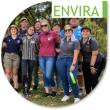
Snail Day shines a spotlight on one of South Africa’s most overlooked freshwater inhabitants: the freshwater snail. In collaboration with partner universities, the WRG brings this event to schools and communities where freshwater snails are not just ecologically important but also directly relevant to human health through diseases such as bilharzia (schistosomiasis). Learners explore snail habitats and biology, identify invasive snail species, use microscopes to observe snails up close, and discover the role of macroinvertebrates in healthy rivers. Through games like “catch the snail” and magnet fishing, children gain a real appreciation for the hidden life of rivers and the knowledge to help protect it.
Read more:

Life under the Microscope
Potchefstroom
Target audience: Ages 4–13 years
Frequency: Annual event
Most of what lives in a freshwater pond is invisible to the naked eye. Life under the microscope invites children aged four to thirteen to enter this hidden world. Children build their own plankton nets from simple materials, wade into the water to collect real samples, and then observe their catches through genuine laboratory microscopes, discovering copepod parasites, diatoms, water fleas, and a dazzling variety of microscopic life. They also learn the names and roles of different types of plankton in aquatic food webs, complete an activity booklet, and create “plankton art” inspired by what they see under the lens. This event gives children their first real glimpse into the science of aquatic ecology and leaves them with a lasting sense of wonder for the rivers and ponds around them.
Read more:

Coelacanth Day – Living Fossils
Potchefstroom
Target audience: Ages 4–13 years
Frequency: Annual event
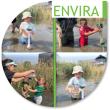
Coelacanth Day takes children on an unforgettable expedition to discover one of the most extraordinary fish on Earth. A creature once thought extinct for 65 million years was rediscovered alive off the coast of South Africa in 1938. Children aged four to thirteen begin with a guided tour of the NWU Zoology Museum, where they encounter a diversity of preserved specimens and learn about extinction, fossils, and adaptation. They then come face-to-face with a full-size replica of the coelacanth, Latimeria chalumnae, on loan from the South African Institute for Aquatic Biodiversity (SAIAB) and follow the story of its discovery through the engaging booklet “Finding Old Fourlegs.” Each child closes the day as a junior palaeontologist, searching for their own coelacanth and painting it in its distinctive spotted pattern. Children gain a sense of scientific wonder, an understanding of evolutionary history, and the thrill of discovery.
Read more:


Rocking the 4 R’s: A Recycling Outreach
Potchefstroom
Target audience: Primary school children
Frequency: Annual event
Rocking the 4 R’s is a hands-on environmental education event that empowers primary school children to become active participants in protecting the environment. In partnership with Nature-I-Am and NWU’s Unit of Geography and Environmental Management, children explore the four pillars of responsible waste management: Reduce, Reuse, Recycle, and Repurpose. Children go on a litter hunt in nature, sort waste by material type to understand different recycling pathways, and then transform “trash” into creative art using bottle caps, stickers, and other discarded items. They leave with a handmade creation, a practical understanding of recycling systems, and the confidence that their daily choices genuinely matter for the environment.
Read more:

World Fish Migration Day
Potchefstroom
Target audience: Ages 4–13
Frequency: Annual event (global day, May)
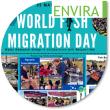
Every two years, World Fish Migration Day unites river lovers across the globe in a shared commitment to free-flowing rivers and migratory fish. The WRG proudly participates in this global awareness campaign, hosting local events in Potchefstroom to teach children and families about the remarkable journeys that fish make through our rivers and why unimpeded river flow is critical to their survival. Children discover which South African fish species are migratory, what obstacles they face (from dams and pollution to invasive species), and what all of us can do to help keep rivers healthy and connected. The event connects our local rivers to a global conversation about freshwater biodiversity and conservation.
Read more:

Fish Day/ Life Below Water
Potchefstroom
Target audience: Ages 4–13 years
Frequency: Annual event
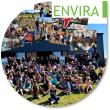
Potch Fish Day, now known as Life Below Water, and aligned with Sustainable Development Goal 14, is the WRG’s flagship annual community outreach event. Held each April at the scenic Lekwena Wildlife Estate, the event welcomes 100–120 children aged four to thirteen from kindergardens and primary schools across the Potchefstroom area and beyond for a full morning of fish-themed science and fun. Children rotate through 12 interactive stations covering fish anatomy, habitats, food webs, feeding, migration, behaviour, aquatic invertebrates, parasites, water quality, and fish collection. Face painting, a photobooth, and small prizes make the day as festive as it is educational. Children walk away knowing the fish in their local rivers by name, understanding how healthy rivers sustain healthy fish populations, and feeling personally invested in protecting the aquatic world. The WRG’s goal is to ignite a lasting passion for freshwater fish, rivers, and healthy aquatic ecosystems, growing the next generation of environmental stewards one Fish Day at a time.
Read more:
World Water Week
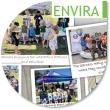
World Water Week, held each August, is a global platform for addressing water challenges. The WRG marks this week each year with multiple events, each targeting a different audience and a different dimension of water stewardship, from school learners to adult community volunteers and citizen scientists.
Fish Day at Vyfhoek Primary School
Potchefstroom
Target audience: Ages 12–13 years
Frequency: Annual event
Each year as part of World Water Week, the WRG brings fish and river science directly to Grade 7 learners at Vyfhoek Primary School. Eighty learners rotate through eight interactive stations exploring fish anatomy, threats to fish populations, migration, food webs, fish diet, habitat preferences, and the biodiversity of river invertebrates. Every station blends education with hands-on activities and small rewards to keep learning fun and memorable. Learners gain curriculum-aligned knowledge about freshwater ecosystems, develop an appreciation for the ecological role of fish in river systems, and leave inspired to protect the rivers that flow through their own community.
Read more
Mooi River Cleanup
Potchefstroom
Target audience: Adult volunteers
Frequency: Annual event
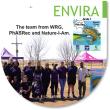
The Mooi River Cleanup is the WRG’s annual call to community action during World Water Week. Volunteers from NWU and the wider Potchefstroom community roll up their sleeves to remove litter and debris from the banks and water of the Mooi River, making a visible, tangible difference for the health of a river that flows through the heart of our city. Volunteers gain a direct experience of the scale of plastic pollution in our waterways and leave with a heightened sense of personal responsibility for the rivers they share. The goal is to make river care a community habit, not a once-off event.
Read more:
Citizen Science River Monitoring
Potchefstroom
Target audience: Community members
Frequency: Annual event
Citizen Science River Monitoring empowers ordinary community members to become real scientists, monitoring the health of the Mooi River using accessible, standardised tools. Participants learn to assess invertebrate biodiversity using the South African Scoring System (SASS5) and measure water quality using WaterCan test kits, testing for nitrates, phosphates, bacteria, and other parameters. Results are uploaded to public water quality maps, meaning every participant contributes real, usable data to the ongoing effort to protect the Mooi River ecosystem. Participants gain practical skills in freshwater monitoring and leave with a clear understanding of the science behind river health.
Read more:
Healthy Water and Rivers
Potchefstroom
Target audience: Ages 12–13 years
Frequency: Annual event
Healthy Water and Rivers is the WRG’s comprehensive water literacy event for Grade 7 learners, presented during World Water Week. Nine interactive learning stations take learners through fish biology, river ecology, water purification, aquatic invertebrates, food webs, sampling techniques, and biodiversity, connecting science directly to the rivers in learners’ own backyard. This event is designed to cultivate environmental awareness and develop a new generation of young environmental stewards. Teachers value the strong curriculum alignment, while learners gain both scientific knowledge and a practical sense of how they can contribute to keeping South Africa’s rivers healthy.
Read more:
Bug Day
Potchefstroom
Target audience: First-year university students
Frequency: Annual event
Bug Day is an annual field experience that takes first-year Zoology students out of the lecture hall and into the living world of invertebrates. Using sweep nets, Berlese funnels, light traps, and bark searches in the NWU Botanical Gardens, student groups collect and identify as many invertebrate species as they can find, discovering that the garden is far more biodiverse than anyone imagined. Students develop hands-on skills in field collection and species identification, gain a practical appreciation for invertebrate diversity and ecology, and experience the collaborative excitement of real scientific fieldwork. Bug Day brings zoological theory to life in the most direct way possible, by finding the animals themselves.
Read more:
Dome Conservancy Citizen Science Showcase
Vredefort Dome (UNESCO World Heritage Site)
Target audience: Conservancy stakeholders, landowners & community partners
The Vredefort Dome Citizen Science Showcase is the WRG’s collaborative initiative to strengthen the long-term protection of the Vaal River within the Vredefort Dome, a UNESCO World Heritage Site on the doorstep of North-West University. As part of the multi-stakeholder Blue Deal Project, WRG works with the Dome Conservancy, landowners, and government departments to monitor and restore this ecologically and geologically unique area. At showcase events, the WRG introduces community members and Conservancy partners to practical citizen science tools, including miniSASS (rapid river health assessment), water quality test kits, clarity tubes, and environmental DNA (eDNA) methods. Participants gain the capacity to routinely monitor the health of the Vaal River and contribute meaningful data to its conservation. The goal is a lasting, science-based partnership between NWU and the Vredefort Dome community.
Read more:
Last updated: June 2026
Comments on the content and accessibility, please contact: Adri Joubert